Showing posts with label wool. Show all posts

Wednesday, December 12, 2012

Gabbeh Rugs For Sale!! 25% OFF

Today we are showcasing 2 great Gabbeh rugs that will brighten up anyone's home. They are both Rug Ideas production rugs and utilize hand spun wool and have all natural vegetable dyes. These are "green rugs"!
Take a look below:
The rug above measures 3'7" x 5'4" and has a great price of just $1950. And if you buy it before the year (2012) ends we'll give you an extra 25% OFF! That's a great bargain for a beautiful, high quality Gabbeh from Iran.

Next we bring you another Gabbeh with the same hand spun wool and natural vegetable dyes. Take a look below:
The above rug measures 3'8" x 5'2" and has a price of $1975. Buy this rug before 2012 ends and you will get the same 25% OFF as the last Gabbeh shown! Pick up one or both of these lovely pieces today at Rug Ideas!

Dr. Khosrow Sobhe (Dr. Kay)
Certified Rug Specialist (CRS)
www.LosAngelesRugCleaning.com
www.RugIdea.com
Tel. 310-770-9085

Monday, October 29, 2012

Turkish Rugs - City Workshops

Old Turkish carpets were woven in reds and dark and light blues, with rows of repeated lozenges, eight pointed stars, and hooked octagons. Many were woven in Ushak, which until the 16th and 17th centuries was the principal center for the Ottoman aristocracy.
Carpet production is a relatively recent occurence in the Hereke area in western Turkey, where carpet weaving was first introduced during the mid-19th and the beginning of the 20th centuries. It is now the source of some of Turkey's most sophisticated carpets, which are distinguished by their elegance and the use of the Senneh knot, and sometimes with gold threads in the weaving of silk carpets. The style was inspired by Persian and French designs, and many follow the designs, and many follow the designs coming out of Kerman and Tabriz, while others were influenced by the Savonnerie and Aubusson carpets. Traditional Persian designs include motifs such as cloudbands, palmettes, and other floral elements in a purely curvilinear style, often with a central medallion and wide borders.
The villages between the towns of Kayseri and Sivas in eastern Turkey produce short pile rugs in a very broad range of designs, from sophisticated, curvilinear patterns influenced by those of Tabriz and Isfahan in Persia and adapted by the local Armenian weavers, to much more geometric styles and prayer rugs. All these patterns are worked in the red, blue, or ivory grounds that are favored in the West. What the weavers produce is controlled nowadays by a central buying policy, so that, no matter whether the rugs are in silk or wool, they are among the finest woven today.

sourced from 'Carpet Style' by Barty Phillips

Dr. Khosrow Sobhe (Dr. Kay)
Certified Rug Specialist (CRS)
www.LosAngelesRugCleaning.com
www.RugIdea.com
Tel. 310-770-9085

Tuesday, October 16, 2012

Heriz Rugs

Heriz is the best known of a number of villages in a district of northwestern Iran that stretches to Tabriz, and its carpets are superior in quality to others created in the region. The silk carpets that were woven there in the second half of the 19th and early 20th centuries were unsurpassed. Very large wool carpets were woven at that time, too, but these rarely come up at auction.
Modern Heriz carpets are of coarser yarn, so the number of knots is fairly low. Nevertheless, they wear extremely well. Although the city of Tabriz is so near, Heriz rugs are quite different in character, and retain an identity very much their own. The dominant composition is based on an enormous and powerful angular central medallion in a field of geometric floral motifs, with the corners echoing the medallion. Surrounding  villages produce variations on this theme, and many produce well-made, tightly woven rugs in curvilinear medallions and corner designs.
Come into Rug Ideas today to see great Heriz rugs that can liven up your home!

sourced from 'Carpet Style' by Barty Phillips

Dr. Khosrow Sobhe (Dr. Kay)
Certified Rug Specialist (CRS)
www.LosAngelesRugCleaning.com
www.RugIdea.com
Tel. 310-770-9085

Tuesday, September 25, 2012

Top 10 Tips for Decorating With Rugs


For a room that needs excitement, adding a rug might be the perfect answer. While that alone is a good enough reason to decorate with a rug, there are others. You might say it completes a room by tying all the different pieces together visually. It can anchor it, define it, while also adding warmth and helping to layer a room's design. How can you best use a rug? There are many different ways, but we will start with ten of them:

Use a rug to define or separate areas, such as seating or dining areas, and foyers.
If you use more than one rug in a room, make sure they are not the same size. Same sized rugs can cut your room in half visually.

When using more than one rug, it's better when the rugs complement each other in style. If not, you could end up with a jarring or unpleasant effect. Too many "warring" patterns in a room will do away with any sense of harmony.

Use a favorite rug as the basis of the color scheme in a room. On the other hand, if you add it after you have your furniture in place, you can use the rug to accent or tie in your existing colors.
Use a rug to visually quieten a room or turn up the volume as needed. If your upholstery or wallpaper have an ornate pattern, choose a rug that is more subtle. When walls and upholstery are fairly subdued, you can try a busier pattern to add more interest to the room.

Use a rug as the focal point of your room,  as rugs can make a huge impact. To do that you can create contrast by painting your walls a hue that echoes one of your rug's accent colors.

Use a rug as a wall hanging for another way to create a focal point.
Don't assume that a rug has to be a rectangle. Let the way you group your furniture dictate the shape of your rug. Try figuring out what shape would look best, and then go with a square, round or oval shape if that seems like the better option than a rectangular one.

When you buy a room size rug, subtract 3 feet from the length and width of the room. Leaving the floor bare at the edges makes it look a little larger. Also, when laying a rug under your dining table, leave at least 24" of rug from the edge of the table out on all sides. This enables the back legs of the chairs to stay on the rug, even when pulled out to let someone sit.

Runners should be 4 inches narrower than your hallway and 18 to 24 inches shorter. Make sure they are wide enough to accommodate both feet on the rug when you walk.
Bonus Tip:
Always use a rug pad to keep your rug from slipping or creeping. The rug liner should be appropriate for your floor type.

sourced from About.com: article by Abe Abbas


Dr. Khosrow Sobhe (Dr. Kay)
Certified Rug Specialist (CRS)
www.LosAngelesRugCleaning.com
www.RugIdea.com
Tel. 310-770-9085

Wednesday, September 5, 2012

Does Cedar Actually Repel Moths?


Cedar-lined storage chests and closets have long been used for long-term storage of out-of-season clothing, in the belief that the cedar will deter moths from destroying the clothing. But does it really work? The damage moths cause to natural fibers is caused not by the moth itself, but by the larvae that hatch out of the eggs the moth lays. Therefore preventing the damage can take two forms, preventing the moth from laying the eggs in the clothing, and killing the larvae as they emerge (or in the egg).
The heavy scent of the cedar is thought to mask the smell of wool, effectively hiding it from the moth seeking a home for her eggs. That is, it doesn't repel moths so much as it camouflages the moth's natural target. If the smell-disguise in fact does deter moths, then any masking smell would work as well, and people have packed old garments away with sprigs of lavender, tansy and rosemary tucked in them for literally centuries.
If the scent-deterrent works (and there's only anecdotal evidence that it does), then it only works on the egg-laying moth. Packing away garments already hosting moth-eggs will yield a cupboard full of rotting wool. Since the larvae are repelled by strong light, shaking and hanging clothing in the sun for a few hours before folding for storage should ensure that what you are storing is larvae-free.


A report from the University of California at Davis suggests that one type of cedar, Eastern Red Cedar (which is actually a juniper), does kill moth larvae over a period of time. The wood contains an aromatic oil that in sufficient concentration, as in an airtight cabinet, will kill small moth larvae. If there is too much air circulation, as in a closet, concentration of the vapors will remain insufficient to kill larvae, although the scent might deter adult moths.
Whether other junipers, or juniper essential oil, which is made from another form of juniper, and from the berries, not the wood, will protect clothing from moths, has not been determined. Even Eastern Red Cedar is only effective against moth larvae for a few years, after which the aromatic oil has evaporated. The presence of a pleasant cedar-scent in grandma's old hopechest is not proof that the box will protect your woolens from munching moths.


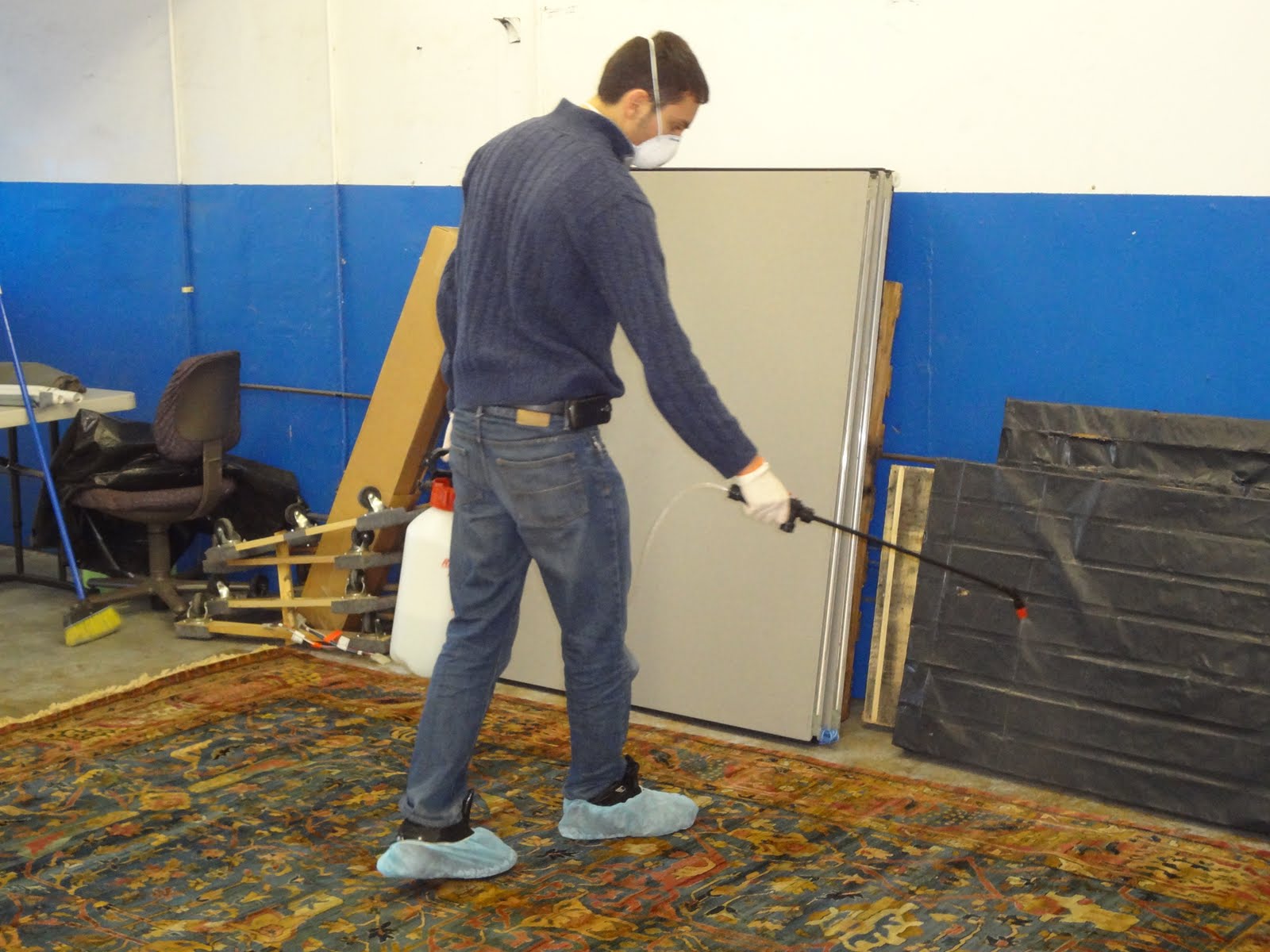
One service we offer to our customers is moth proofing for their rugs. After the rug/s are cleaned we can spray a light coating which acts as a bitorent, giving the wool a bad taste to moth. We have found this treatment to be quite effective in the prevention of moth damage. We are in the midst of moth season so if you want to protect your rugs, bring them in to Rug Ideas so we can help you keep those pesky insects away from your pieces of art.

sourced from wisegeek.com

Dr. Khosrow Sobhe (Dr. Kay)
Certified Rug Specialist (CRS)
www.LosAngelesRugCleaning.com
www.RugIdea.com
Tel. 310-770-9085

Wednesday, August 15, 2012

Reasons To Choose Wool

Reasons To Choose Wool:

Natural - Grown on sheep that graze freely on the countryside

Sustainable - Wool is an annually renewable fibre and therefore is a resource that is naturally replenished.

Warm - Wool is the original fibre for warmth; it has insulating properties and can keep you warm and cozy in the coldest conditions.

Cool - Wool is also a fiber that stays cool - it breathes and will adapt to suit its environment or its wearer.

Comfortable - The flexible, tactile nature of wool makes it comfortable to wear or to feel underfoot.
Technical - The complex cell structuremakes wool a working fibre; the key attributes of the fleece that protect the sheep continue to perform even after it has been shorn.

Versatile - The endless suitability of wool for many applications from fashions to floors to insulation show that wool is capable of adapting to its use.

Naturally fire-retardent - as a result of its high water and nitrogen content, wool will naturally resist fire and does not melt, drip or emit noxious fumes, which are key causes of fatality in fire situations.

Pure wool is bio-degradable - The natural ability of wool to biodegrade is an asset to the world as the eco agenda grows.

Durable - Unique Resilience ensures that it can withstand wear and tear over a long period.
Long-lasting appearance - Appearance retention is a key attribute of wool so that it will look beautiful for many years

Natural bounce-back - On the floor, wool has the ability to resist flattening and in a garment it will resist creases. This is due to its natural spring-like character.

Quality and style - The enduring quality and style of wool is still seen by the world's fashion and interior's champions as being superior to other fibres.

Safe and slip free - Wool is the perfect flooring for the home - young children or the elderly can be protected from accidents with a soft flooring.

Carbon efficient - An effective insulator, wool will reduce the need for heating and protect against heat loss making it highly carbon efficient.

Non allergenic - Able to trap dust within its microscopic scales, wool prevents floating dust in the home so that it can be vacuumed later. This keeps the air cleaner for breathing

Sourced from campaignforwool.org

Dr. Khosrow Sobhe (Dr. Kay)
Certified Rug Specialist (CRS)
www.LosAngelesRugCleaning.com
www.RugIdea.com
Tel. 310-770-9085

Monday, August 13, 2012

The Beauty of Wool, Part 1

The great majority of Oriental Rugs are made with wool because of its beauty and durability. Wool is capable of absorbing deep color from dyestuffs as wool fiber drinks in color like a sponge and locks it within the fiber in a unique molecular bond. Wool is a low luster fiber which gives colors a rich, deep quality.
Wool fiber resists staining, matting, wetting, crushing, and burning, giving it durability no synthetic fiber can match. The texture of wool does not change over time and its original color is not altered by repeated cleaning, shampooing and floor traffic.
Not all wool wool alike. Some countries have a natural supply of excellent wool for rugmaking. Other rely on imported wools from New Zealand or other sources. Some countries have a more consistent wool quality through blending, others a more diverse wool quality through different blends.
Throughout countless centuries the many special properties of wool have made it the most popular fiber for floor coverings. Those same properties continue to endear it to tug makers and owners. One of our next posts will go through the attributes of wool... soon to come!

Dr. Khosrow Sobhe (Dr. Kay)
Certified Rug Specialist (CRS)
www.LosAngelesRugCleaning.com
www.RugIdea.com
Tel. 310-770-9085

Wednesday, June 13, 2012

Moth Season Is Upon Us! :(

This is the time of year when carpet moths show up in your home looking to snack on Oriental and Persian rugs. We are not the only ones who like the longer days, warm temperatures, and sunny weather.  Moths love warm conditions and this is the season to be especially vigilant with respect to our woolen goods, including our cherished wool rugs and kilims.  These moths are tiny things, hardly noticable as they flutter about. Tineola Bisselliella, they’re called.
Carpet moths rarely cause trouble to rugs that are regularly walked on and vacuumed, so try to keep them as clean as possible and vacuum once a week. On the other hand, they gravitate to dark, undisturbed places where they can eat in peace and often they cause really serious damage. They prefer rugs stored in places like basements and closets, but they will settle for Oriental rugs under sofas or beds or where rugs abut walls and are neither vacuumed or walked on and rarely disturbed. Often they chew away at the backs of rugs rather than their fronts. Strangely, the carpet moth seems to prefer dirty rugs, often avoiding clean rugs.
Be careful with moths.  They will literally eat your woolen goods, as wool is protein, and moths just love it.  And although repairing and/or restoring a moth damaged wool kilim rug, dhurrie, or kilim is always possible (we offer reweaving services for this type of damage), the best route would be not to have them damaged at all.  Some steps you can take:  never store woolen goods in plastic, dark, humid, or enclosed spaces; inspect your wool rugs and kilims periodically; expose your wool rug or kilim to the sun; keep wool kilims or rugs in well ventilated areas; never place wool rugs or kilims in areas known to be infested with moths.
If you do happen to have a moth infestation, call us immediately so we can first get the infested carpets deep cleaned to remove all moths and larvae. We can then offer our moth proofing service, which a bittorent that makes the wool taste bad to moths. So no matter what situation you are having with moths and your rugs, Rug Ideas is here to help. 
"An ounce of prevention is worth a pound of cure".


Dr. Khosrow Sobhe (Dr. Kay)
Certified Rug Specialist (CRS)
www.LosAngelesRugCleaning.com
www.RugIdea.com
Tel. 310-770-9085

Tuesday, December 9, 2008

Santa Claus on Rug/Kilim, A Perfect Christmas/Holiday Gift Idea


Our weaver this time wanted to show us how artist she is. She made a photo of the Santa Claus and wove it on a kilim with his beard high lighted. This is for sale for $195 with free shipping in the U.S. continent. The size is 2' 7" x 4' 9". It is all wool.

Khosrow Sobhe
www.RugIdea.com
310-770-9085

Friday, May 23, 2008

Mercedes Benz Logo on Persian Rugs


I received a new shipment of Persian rugs from Tehran while ago. My supplier has sent me a Mercedes Benz logo made on a Persian rug along with other rugs and kilims. The size of this little rug 21" x 16 and the knot per square inch, KPSI is around 300. The pile is wool on cotton foundation (warp). This hand knotted Persian carpet was made in the famous city of Kashan.


Khosrow Sobhe
www.rugidea.com
310-770-9085